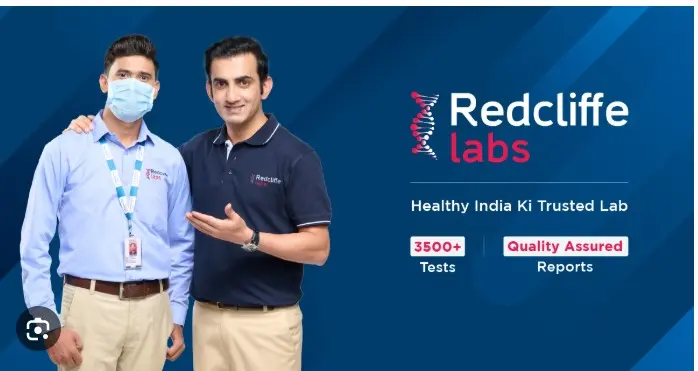
I am exploring the healthtech space recently for getting some insight and trying to understand how diagnostics startups work and are scaling in India. While searching the startup in healthtech space . I found Redcliffe Labs – a startup quietly building a large home diagnostics network, and it is quite interesting how they are doing this. How these guys are working efficiently in this industry .
Quick Stats for Redcliffe Labs
| Metric | Detail |
|---|---|
| Founded | 2018 |
| Founder | Aditya Kandoi , Dheeraj Jain , Ashish Dubey |
| Headquarters | Noida, India |
| Sector | Diagnostics / Healthtech |
| Funding Raised | ~$120M+ across rounds |
| Lead Investors | …… |
1. Funding Table
| Round | Date | Amount | Lead Investors |
| Seed | 2019-21 | ~$1.5M | Y Combinator, Angel Investors |
| Series A | April 2021 | $10M | Alkemi, Chiratae Ventures |
| Series B | Feb 2022 | $61M | LeapFrog, HealthQuad, Schroders |
| Series C | Sept 2024 | $42M | IFU (Denmark), LeapFrog |
| Total | Current | $113M+ | Status: Ready for IPO |
Market Opportunity – India’s $15B Diagnostics Industry
India’s diagnostics market is estimated to cross $15–18 billion in the coming years. in recent years specially after corona this industry is rising significantly and the real cause behind increasing market is.
Growth drivers include:
-
rising lifestyle diseases
-
preventive health awareness
-
corporate health programs
-
aging population
But the biggest change was behavioral. Consumers started searching online for tests like:
-
thyroid test
-
vitamin deficiency
-
diabetes monitoring
Diagnostics suddenly became search-driven healthcare.
This is where digital-first labs gained an advantage.
Fundraising Journey – Why Investors Entered Early
As Redcliffe Labs expanded its diagnostic network across India, it gradually attracted capital from healthcare-focused investors.
The company raised funding across several rounds, with investors such as Alkemi Growth Capital, Chiratae Ventures, LeapFrog Investments, HealthQuad, and IFU Denmark backing its growth at different stages.
But investors were not simply funding another diagnostic testing company.
What they were really betting on was network scale.
Diagnostics is a business where scale changes the economics.
A few structural factors explain why:
-
Higher sample volumes reduce per-test costs.
When a lab processes more samples each day, fixed costs such as equipment and staff get distributed across a larger number of tests. -
Centralized lab infrastructure improves margins.
Instead of building labs in every city, samples can be routed to high-capacity processing centers. -
A strong sample-collection network becomes a distribution advantage.
The ability to collect samples from patients’ homes across multiple cities can be difficult for smaller labs to replicate.
Once that infrastructure is in place, expanding into new locations becomes significantly easier. The company mainly needs to extend its sample collection and logistics network, while existing labs handle the testing.
That scalability is one of the reasons investors saw potential in the model.
Business Model – How Redcliffe Actually Makes Money
Like most diagnostics companies, Redcliffe Labs generates revenue through a mix of consumer testing and institutional partnerships.
At a high level, the company operates through three primary revenue streams.
1️⃣ Direct-to-Consumer Testing
Customers can book diagnostic tests directly through the company’s website or mobile platform.
Once a test is booked, a trained phlebotomist will visit the patient’s home to collect the sample. The sample is then transported to laboratories within Redcliffe’s diagnostic network for processing.
This model makes testing more convenient for patients who prefer home sample collection instead of visiting a lab.
2️⃣ Preventive Health Packages
Another important part of the business comes from preventive health checkups.
These include bundled test panels such as:
-
full body checkups
-
wellness screening panels
-
lifestyle disease monitoring tests
Preventive packages often encourage repeat testing and help maintain steady testing demand.
3️⃣ B2B Partnerships
Redcliffe also works with hospitals, clinics, and corporate health programs.
In these partnerships, healthcare providers or employers route diagnostic testing demand to Redcliffe’s network. This allows the company to generate additional testing volume beyond individual consumers.
Because the business serves both direct consumers and institutional partners, the company operates with a hybrid demand model.
Unit Economics – Where the Real Game Lies
In diagnostics, profitability often depends on operational scale.
Three factors usually matter the most:
-
sample volume
-
lab utilization
-
logistics efficiency
When a lab processes more samples each day, fixed costs such as equipment and staffing get spread across a larger number of tests. This helps reduce the cost per test.
However, home diagnostics introduces another variable — logistics.
Collecting samples from patients’ homes requires:
-
trained phlebotomists
-
route planning for sample collection
-
safe transportation and cold-chain handling
If logistics costs rise faster than testing volume, margins can quickly shrink.
For this reason, scale becomes important in home diagnostics. Without enough testing volume, the cost of running the collection network can become expensive.
Risks & Structural Pressure
Like most healthcare businesses, diagnostics startups operate in a competitive environment.
Competition
Established diagnostic chains such as Dr. Lal PathLabs already have strong brand recognition and large laboratory networks.
Pricing Pressure
Diagnostics testing or we can say people in India is a highly price-sensitive . Discounting and promotional pricing can put pressure on margins.
Operational Complexity
Managing large-scale home sample collection requires strong operational systems.
Thousands of daily sample collections must be coordinated across different locations, and any operational error can affect patient trust.
In healthcare, reliability matters as much as growth.
Long-Term Outlook (3–5 Years)
Three possible scenarios exist.
Best Case
Redcliffe becomes a major diagnostics network competing with legacy chains.
Base Case
Strong regional diagnostics brand with nationwide presence.
Risk Case
Margin pressure from established players slows growth.
The outcome will depend on operational efficiency.
Drudhh.com Insight
Redcliffe is not reinventing diagnostics.It is reorganizing it.
Traditional labs focused on infrastructure ownership.
Digital-first labs focus on network spenditure.
That difference matters.
The winner in this space may not be the lab with the most machines — but the one with the smartest logistics and digital acquisition strategy. At the end this is not even starting in the diagnostic /healthtech sctor the future is more brighter and optimistic . I thing
Reality Check
Diagnostics is not a high-margin tech business.
Margins depend heavily on scale and operational discipline.
If logistics costs rise faster than testing volume, profitability disappears quickly.
This is where many health startups struggle.
Lessons for Founders
I am not talking about the founder of this startup these lessons are for to be founders who are aspiring to become a founder one day
-
Healthcare logistics can be a moat
-
Operational efficiency matters more than hype
-
Digital acquisition is powerful but expensive
-
Scale is critical in diagnostics
-
Trust is the real brand asset in healthcare
FAQ (AEO Optimized)
What is Redcliffe Labs?
Redcliffe Labs is an Indian diagnostics startup offering home sample collection and laboratory testing services.
Who founded Redcliffe Labs?
The company was founded by Aditya Kandoi.
How much funding has Redcliffe Labs raised?
The company has raised roughly $60M+ across funding rounds.
What services does Redcliffe Labs provide?
Diagnostic testing, preventive health packages and home sample collection.