Published: June 9, 2026 .
Coverage: June 2–8, 2026 ·
Read Time: ~11 min ·
Category: Capital Intelligence · Weekly Analysis ·
Author: Drudhh Editorial
Drudhh Capital Intelligence · India Startup Funding · June 2026
India Startup Funding Analysis June 2–8, 2026:
Quick Commerce Just Told This Market Something
Nobody Expected — And a 260% Rebound Confirmed It
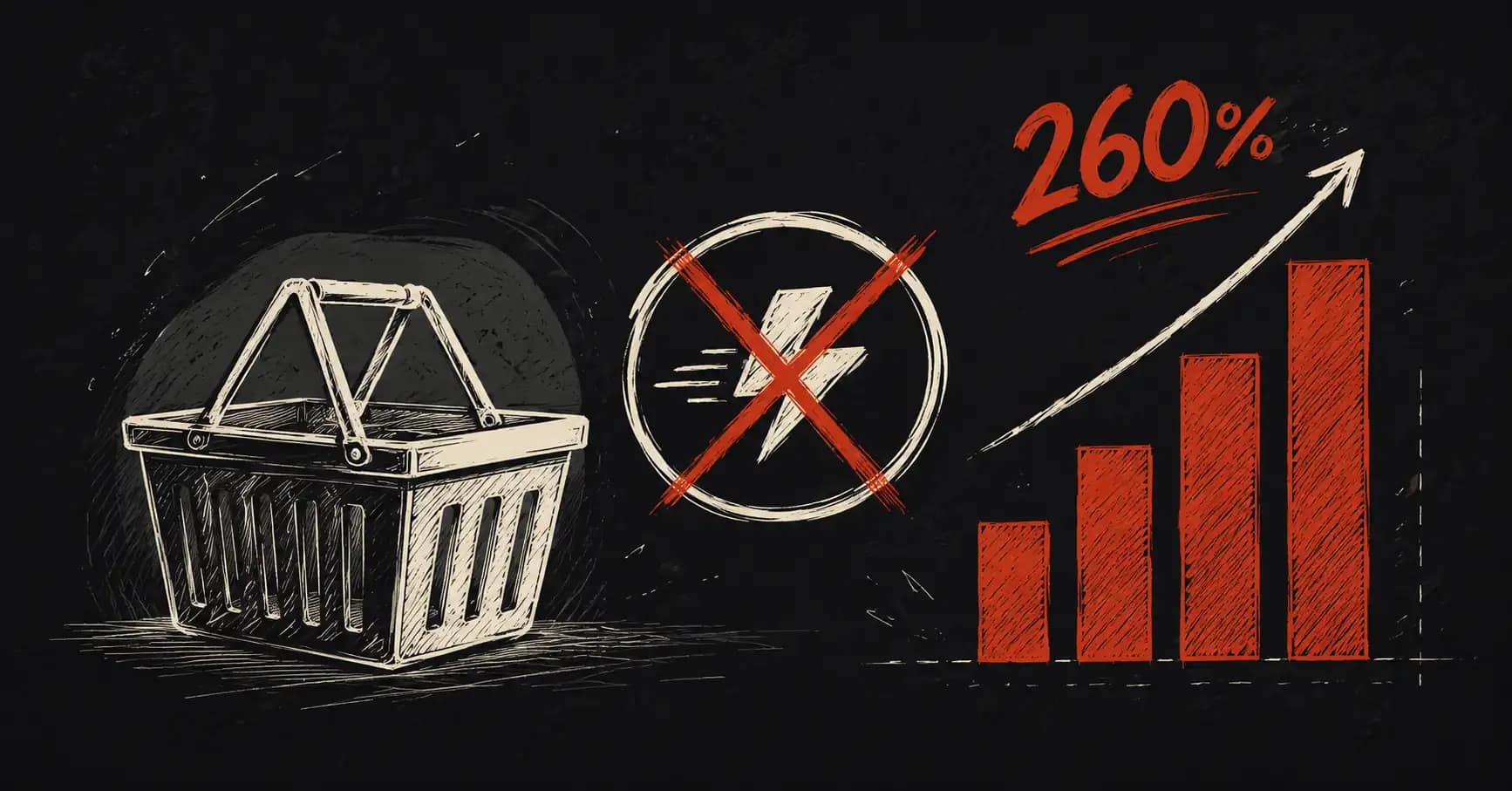
India startup funding jumped 260% in a single week — from the lowest point of 2026 to $187 million across 21 deals. But the number is not the story. The story is why FirstClub doubled its valuation in nine months by doing the opposite of everything Blinkit and Zepto taught this market.
Total Capital
21 confirmed deals
Week-on-Week Jump
From 2026 lowest point
FirstClub Valuation
2x in 9 months
Peak XV Deals in 5 Weeks
Most active fund in India
What This Week Actually Signals — Beyond the 260%
The 260% headline is real but misleading. Between June 1 and June 5, Indian startups collectively raised $187.4 million across 21 deals, marking a massive 260% jump from the $52 million raised through 14 deals in the preceding week. But the prior week — May 26–31 — was India’s quietest funding week of 2026, artificially depressed after a string of large May closes. The correct comparison is not week-on-week. It is whether this week’s deal quality, investor composition, and sector spread signal something durable.
The answer is yes — and for one specific reason. In a quick-commerce market obsessed with speed, FirstClub convinced investors that quality may be a fresh opportunity, doubling its valuation to $255 million just nine months after its last funding round. That sentence is worth reading twice. The dominant narrative of India’s quick commerce market for four years has been speed — 10 minutes, 8 minutes, dark store density, hyperlocal logistics. FirstClub built the opposite thesis. It banned 200+ harmful ingredients, lab-tested products before shelving, and asked a harder question: is what’s inside actually safe? And Peak XV and Sofina wrote a $55 million cheque to that question.
Beyond FirstClub, this week confirmed three parallel trends. Electric mobility is recovering from 2025’s funding drought — Simple Energy’s Rs 250 crore mixed debt-equity round shows that the EV market is attracting blended capital structures, not just equity. Consumer lifestyle is consolidating — Agilitas Sports’ Rs 225 crore raise, backed by Nexus and Rainmatter, signals that sportswear is becoming a venture-backable category in India. And AI video generation is now a fundable segment — TrueFan AI’s $10 million Series A is the first institutional commitment specifically to AI-generated video for Indian enterprise customers.
Weekly Funding Snapshot — June 2–8, 2026
| Startup | Sector | Amount | Stage | Lead Investor(s) |
|---|---|---|---|---|
| FirstClub | Quick Commerce | $55M | Series B | Peak XV Partners, Sofina, Accel, RTP Global |
| Simple Energy | EV / Two-Wheeler | Rs 250 Cr (~$26.3M) | Series B (equity + debt) | Velumani Family Office, HDFC Bank, Capitar Ventures |
| Agilitas Sports | Sportswear / D2C | Rs 225 Cr (~$23.5M) | Series C (follow-on) | Nexus Venture Partners, Rainmatter (Zerodha) |
| TrueFan AI | AI Video / Enterprise | $10M | Series A | Baring Private Equity India, Z3Partners, IAN Alpha Fund |
| WeRize | Fintech / NBFC | $7M (Rs 67 Cr) | Pre-Series C | Sony Innovation Fund |
| Phab | D2C Nutrition Snacks | $4M | Pre-Series A | OTP Ventures, Chona Family Office |
| Fraganote | D2C Fragrance | $3M | Series A | Undisclosed |
| VoltSeal | EV Battery Tech | $1.5M | Pre-Seed | Theia Ventures, Rainmatter, Momentum Capital, Social Alpha |
| Estro Tech Robotics | Robotics | Undisclosed | Early Stage | Genrobotics |
| InterCosmos | Spacetech | Undisclosed | Early Stage | a99 VC |
| + KorinMi (beauty, undisclosed) · Propsoch (proptech, seed) · Zuvees (D2C, undisclosed) · Rosada (D2C, undisclosed) · Aquapulse (cleantech, undisclosed) · ProLearn (edtech, undisclosed) · Non-funding: Acko hires 4 senior leaders ahead of IPO · Palo Alto Networks acquires AI startup Portkey · AutoFurnish IPO · PhonePe Indus Appstore CPO exit | ||||
🏆 Largest: FirstClub $55M
⚡ EV: Simple Energy Rs 250Cr
👟 Sportswear: Agilitas $23.5M
🎬 AI Video: TrueFan $10M
Where The Capital Went
Quick Commerce
$55M
EV / Mobility
$26.3M
Sportswear / D2C
$23.5M
AI Video / Enterprise
$10M
Fintech
$7M
D2C + Early Stage
~$9M
Key Deal Analysis
1. FirstClub — $55M Series B | Quick Commerce | Valuation: $255M
Bengaluru-headquartered FirstClub was founded in September 2024 by former Flipkart and Cleartrip CEO Ayyappan R alongside Govindaraju Sharmila. In eighteen months, it went from zero to a $255 million valuation. The speed of that journey is unusual. The reason behind it is more interesting.
FirstClub secured $55 million in Series B funding led by Peak XV Partners and Sofina, with participation from existing investors Accel, RTP Global, and Paramark Ventures. The startup operates a grocery platform centred on product quality and has surpassed 1 million orders within its first year. The company bans over 200 harmful ingredients — synthetic dyes, trans fats, excessive preservatives — and lab-tests every product category before it enters its supply chain. In a market where Blinkit, Zepto, and Instamart compete on delivery minutes, FirstClub competes on what is inside the package.
GV Ravishankar of Peak XV said: “The first wave of quick commerce was built for speed. FirstClub is building for trust. With an explosion of D2C brands, customers need a neutral platform that curates for quality. FirstClub’s rapid growth and very high customer retention shows the consumer love that they have been able to build on the back of transparency, quality, and product standards.” That framing — trust as a platform moat — is the investment thesis in one sentence.
FirstClub’s valuation doubled from $120 million in September 2025 to $255 million in June 2026. The company currently operates four dark stores in Bengaluru and plans to expand to 35 by year-end. The $55 million will fund new city expansion, new categories (beauty, personal care, pet care), and supply chain tech.
→ Strategic implication: FirstClub’s raise confirms that India’s premium consumer segment is large enough to support a quality-first quick commerce platform alongside speed-first incumbents. For D2C brands, this creates a new distribution question: should your product be on Blinkit (volume, speed) or FirstClub (trust, margins)? The answer is probably both — but FirstClub’s growth changes how premium brand partnerships will be structured in India’s quick commerce ecosystem.
2. Simple Energy — Rs 250 Cr (~$26.3M) Series B | Electric Two-Wheeler
Simple Energy, a Bengaluru-based electric two-wheeler manufacturer, closed a Series B funding round of Rs 250 crore ($26 million) through a mix of debt and equity. The round was led by the family office of Dr. Arokiaswamy Velumani, with HDFC Bank, Capitar Ventures, and other NBFCs providing Rs 123 crore in debt financing. The remaining Rs 127 crore came in as equity — a split that tells its own story.
Simple Energy competes directly with Ola Electric, Ather Energy, TVS iQube, and Bajaj Chetak — a market that has collectively disappointed investors with delayed deliveries, quality complaints, and margin compression. The Velumani family office participation is interesting: Dr. Velumani built Thyrocare — India’s largest diagnostics chain — through relentless unit economics discipline and operational standardisation. His family office backing Simple Energy suggests that the thesis here is execution quality in a noisy market, not just technology differentiation.
The Rs 123 crore debt component from HDFC Bank and NBFCs is also significant. EV manufacturers with manufacturing assets and purchase orders can now access structured debt — meaning pure equity dilution for expansion capital is becoming less necessary for EV hardware companies with proven production capability.
→ Strategic implication: The equity + debt structure in Simple Energy’s round is the model that will define EV hardware fundraising in 2026–27. Founders in EV manufacturing should be modelling blended capital structures — institutional equity for growth narrative, structured debt for manufacturing capex — rather than purely equity raises that dilute founders at early growth stages.
3. Agilitas Sports — Rs 225 Cr (~$23.5M) | Sportswear / Athleisure
Agilitas Sports raised Rs 225 crore from Nexus Venture Partners (Rs 200 crore follow-on) and Rainmatter by Zerodha (Rs 25 crore). The company plans to use the funds to grow manufacturing, expand its brands, and increase retail presence as demand for sports and fitness clothing rises in India.
Founded by former Puma India MD Abhishek Ganguly alongside Amit Prabhu, Atul Bajaj, and Nayantara Parikh in 2023, Agilitas is building India’s first vertically integrated sportswear group. It now owns the One8 brand in partnership with Virat Kohli, having acquired it from Kohli’s team, and operates across footwear, apparel, and accessories. The Nexus follow-on — Rs 200 crore from an investor who has already written cheques into this company — is the strongest signal possible: the lead investor is doubling down, not waiting for new investors to validate the story.
Rainmatter’s Rs 25 crore participation also matters. Rainmatter — the investment arm of Zerodha founder Nithin Kamath — typically backs companies with a structural social or health mission. Sportswear fits the active-lifestyle thesis that Rainmatter has been building around. This is not a financial bet — it is a portfolio alignment signal.
→ Strategic implication: India’s sports and active lifestyle market — Rs 20,000+ crore and growing at 18% annually — is producing its first venture-backable homegrown brand group. Agilitas is the template. Founders building in sports equipment, athleisure, or fitness consumer goods should note that Nexus now has an active sports portfolio thesis — and Rainmatter is writing cheques into active lifestyle companies alongside financial ones.
4. TrueFan AI — $10M Series A | AI Video Generation / Enterprise
TrueFan AI secured $10 million in a Series A round led by Baring Private Equity Partners India and Z3Partners, with IAN Alpha Fund and 3Lines Venture Capital also participating. The round was raised at a post-money valuation of $40 million. TrueFan AI said the funds will be used to invest in AI infrastructure and expand enterprise deployments.
Gurugram-based TrueFan AI builds AI-generated video for enterprise use cases — marketing content, product demonstrations, training materials, and personalised customer communications. This is not the Sora or Runway consumer use case. This is a B2B enterprise SaaS layer built on top of video generation models — the equivalent of what Salesforce did with CRM data or what Freshdesk did with customer support. The $40 million post-money valuation at Series A is conservative — suggesting the founders chose a disciplined entry price over a stretched pre-revenue multiple.
→ Strategic implication: AI video generation for Indian enterprise is now a funded, institutionally validated category. TrueFan’s raise gives every Indian enterprise AI video startup a reference valuation and a confirmed investor appetite. Baring PE India writing a Series A cheque into this category — not a typical territory for PE funds — signals that the market is maturing faster than traditional stage classifications suggest.
3 Investor Behaviour Patterns This Week
PATTERN 01 Peak XV is building the most diversified India portfolio of any fund in 2026
In five weeks — May to June 2026 — Peak XV led or participated in: Rapido ($240M mobility), Scapia ($63M travel fintech), C2i Semiconductors ($16.7M deeptech), HrdWyr ($13M semiconductor), and now FirstClub ($55M quick commerce). Five deals across five completely different sectors. That is not sector-focused fund thesis investing. That is thesis-agnostic pattern recognition — backing founders and execution quality regardless of category. For founders across any sector, Peak XV is now the most likely institutional lead in India regardless of what you are building, provided your execution metrics are credible.
PATTERN 02 Rainmatter is becoming India’s most active mission-aligned co-investor — and it is not just climate
Rainmatter — the investment vehicle of Zerodha’s Nithin Kamath — participated in both VoltSeal (EV battery, pre-seed) and Agilitas Sports (sportswear, Series C follow-on) in the same week. These are not random portfolio fits. Rainmatter’s thesis is active lifestyle, health, and environmental sustainability. It is building a portfolio that reinforces this identity across consumer brands, cleantech, and active lifestyle companies. For founders in these spaces, Rainmatter is not just a financial investor — it is a brand endorsement from one of India’s most trusted founder-investors, which carries significant second-order benefits in partnership conversations and PR.
PATTERN 03 Sony Innovation Fund writing a pre-Series C cheque into Indian fintech is a category legitimacy signal
WeRize raised $7 million in a pre-Series C round from Sony Innovation Fund — Japan’s strategic tech investor. Sony does not write fintech cheques casually. When a global media-to-electronics conglomerate invests in a pre-Series C Indian fintech company, it is not doing so for financial return alone. WeRize operates at the intersection of financial services and community networks — a model that Sony likely sees as relevant to its digital services expansion thesis in Asia. Japanese corporate VCs entering Indian fintech is a trend worth tracking. Expect more appearances from NTT Ventures, SoftBank Vision Fund II, and Recruit Holdings across Indian SaaS and fintech in H2 2026.
The Deal Most People Missed
⚑ Underreported Signal
Palo Alto Networks acquires Portkey — India’s most significant AI exit of 2026
Every publication covered FirstClub. Almost nobody gave adequate space to the most strategically important event of the week: US cybersecurity giant Palo Alto Networks acquired Portkey — an Indian AI startup backed by Elevation Capital and Lightspeed India.
Portkey builds an AI gateway — infrastructure that sits between enterprise applications and multiple LLM providers (OpenAI, Anthropic, Google, Mistral), enabling teams to route, monitor, and secure AI calls across providers. Palo Alto Networks is buying this capability because enterprise AI security is the fastest-growing concern in its customer base. Every Fortune 500 company deploying AI internally needs to route AI calls safely, log them for compliance, and switch providers without re-engineering their stack. Portkey solves all three.
The acquisition amount was not disclosed, but Elevation and Lightspeed typically exit at 10–25x on early-stage enterprise infrastructure investments. For Indian founders building AI infrastructure or enterprise AI tooling: this exit is your reference story. Build the layer that makes AI adoption safe, manageable, and auditable — not just fast.
Non-Funding Signals That Matter This Week
Acko hires 4 senior leaders — IPO preparation is now operational
Acko bolstered its leadership team with four new vertical heads ahead of its IPO plans — including former Junglee Games executive Apoorv Kalra for auto, ex-Meta executive Kunal Kapur for health, Vivek Sharma for the Acko Drive Ecosystem, and a former Zepto executive for another vertical. Hiring at this seniority and speed is not routine talent acquisition. It is IPO preparation — building the management depth that SEBI and public market investors expect from a company at Acko’s stage. With ICICI Securities, Morgan Stanley, and Kotak already appointed as bankers, Acko’s IPO is now in active operational preparation, not just planning.
AutoFurnish goes public — India’s IPO market is absorbing smaller startups too
AutoFurnish, a Gurugram-based automotive accessories e-commerce company, went public this week — making it one of the smaller startups to list on Indian exchanges in 2026. This is important for the ecosystem narrative: the IPO market in India is not exclusively for unicorns and decacorns. Profitable, niche, profitable e-commerce companies are finding public market exits. Founders who have built defensible, profitable businesses in niche categories should be modelling IPO timelines alongside M&A scenarios — the exchange windows are genuinely open.
June 2026 — Opening Week in Context
June has opened with a sharp rebound from May’s closing week — but the more important comparison is to the broader May 2026 trend. May was India’s strongest funding month since late 2024, driven by Rapido ($240M), Scapia ($63M), Agnikul ($70M), and 60+ other deals totalling approximately $630 million. June’s opening week of $187 million suggests the momentum is carrying forward, not dissipating.
The sector rotation that began in May — from AI software to hard infrastructure and physical consumer goods — appears to be moderating back toward a balanced mix in June. This week had quick commerce, EV, sportswear, AI video, fintech, and early-stage D2C simultaneously. That breadth is a healthier signal than any single category dominating.
Year-to-date, India’s startup ecosystem has now raised approximately $7.7 billion+ across equity and structured debt rounds — tracking ahead of 2025’s equivalent period. If June sustains $150–200 million per week, the full-year 2026 total may approach or exceed $16–17 billion — which would mark a meaningful recovery from 2024’s $11.4 billion.
What This Week Means For Founders
→
→
→
→
→
What To Watch — June 9–15, 2026
►
Zepto UDRHP: The six-to-eight week clock from SEBI’s May 8 observation letter is approaching its midpoint. Any updated prospectus filing with FY26 financials will reset quick-commerce peer valuations overnight. Watch for MCA or SEBI announcement filings.
►
Acko DRHP filing: Bankers appointed, senior team built. The formal DRHP could come any week in H2 2026. Any regulatory filing announcement will make Acko the most discussed insurance IPO since Go Digit.
►
FirstClub dark store expansion: The company plans to scale from 4 to 35 dark stores in Bengaluru this year. First expansion announcements — new stores, new cities — will confirm whether the quality-commerce thesis can replicate outside its initial market.
►
Physis Capital first investments: Nandan Nilekani’s Rs 2,000 crore AI and deeptech fund is operational. Its first announced portfolio companies will define the fund’s sector focus and signal which AI verticals are considered most fundable in India by its LP composition.
►
Skyroot Vikram-1 launch attempt: India’s first private orbital launch vehicle has been at Sriharikota since late May. Any launch window announcement or attempt will be India’s most-watched startup moment of 2026 — and will have immediate valuation implications for Agnikul and every other spacetech company in the pipeline.
Frequently Asked Questions
How much funding did Indian startups raise in the week of June 2–8, 2026?
Indian startups raised approximately $187 million across 21 confirmed deals during June 2–8, 2026 — a 260% jump from the prior week’s $52 million, which was the lowest weekly figure of 2026. The rebound was led by FirstClub ($55M Series B), Simple Energy ($26.3M Series B), Agilitas Sports ($23.5M), and TrueFan AI ($10M Series A).
Which Indian startup raised the most funding in June 2–8, 2026?
FirstClub raised the largest round — $55 million in a Series B co-led by Peak XV Partners and Sofina, with Accel, RTP Global, and Paramark Ventures participating. The round values the Bengaluru-based quality-first quick commerce startup at $255 million — more than doubling from $120 million in September 2025.
What is FirstClub and why did it raise $55 million?
FirstClub is a Bengaluru-based quick commerce startup founded in 2024 by former Flipkart and Cleartrip CEO Ayyappan R. It differentiates from Blinkit and Zepto by focusing on quality over speed — banning 200+ harmful ingredients and lab-testing every product before it reaches shelves. It crossed 1 million orders in its first year. Peak XV’s GV Ravishankar described it as “the first wave built for speed — FirstClub building for trust.”
How much did Simple Energy raise in June 2026?
Simple Energy raised Rs 250 crore (approximately $26.3 million) in a Series B round through a mix of equity and debt. The equity portion was led by the family office of Thyrocare founder Dr. Arokiaswamy Velumani. HDFC Bank, Capitar Ventures, and other NBFCs provided Rs 123 crore in debt financing. Funds will expand manufacturing capacity.
What is Agilitas Sports and who invested in it?
Agilitas Sports is a Bengaluru-based vertically integrated sportswear company founded in 2023 by former Puma India MD Abhishek Ganguly. It raised Rs 225 crore from Nexus Venture Partners (Rs 200 crore follow-on) and Rainmatter by Zerodha (Rs 25 crore). Agilitas owns the One8 brand in partnership with Virat Kohli.
Why did India startup funding jump 260% in the first week of June 2026?
The 260% jump from the prior week reflects deal pipeline compression and release — not a fundamental sentiment shift. May’s last week was the quietest of 2026 after a string of large May closes. Several deals that had been in advanced diligence simultaneously closed in June’s first week. This pattern — quiet trough followed by a burst — recurs in India’s funding calendar and should not be read as permanent acceleration.
Is Peak XV Partners the most active VC in India in 2026?
Peak XV Partners has been among the most active and visible funds in India in 2026. It led or participated in Rapido ($240M), Scapia ($63M), C2i Semiconductors ($16.7M), HrdWyr ($13M), and FirstClub ($55M) across May–June 2026 alone — five deals across five different sectors, confirming a thesis-agnostic, execution-quality-focused investment approach.
What does FirstClub’s valuation of $255 million tell us about India’s quick commerce market?
FirstClub’s $255 million valuation at Series B — less than two years since founding — signals that India’s quick commerce market is large enough to support multiple differentiated models simultaneously. Speed-first (Blinkit, Zepto) and quality-first (FirstClub) can both attract institutional capital. The market is not winner-take-all. It is segment-by-segment, and the premium quality segment is now independently valued at quarter-billion dollars and rising.
Drudhh Editorial
Capital Intelligence · India Startup Ecosystem
Drudhh Editorial tracks India startup funding, VC activity, and ecosystem trends every week. Our team analyses capital patterns, investor behaviour, and sector signals to give founders and investors the interpretation layer that news roundups miss. Learn more about Drudhh →
More from Drudhh Capital Intelligence
→ Last Week: C2i Semiconductors, StrainX Bioworks, and India’s Most Honest Week of May
Sources: TechCrunch · DealStreetAsia · Entrackr · StartupTalky · Inc42 · YourStory · Indian Retailer · StartupFox · TechStory · VieStories · Bhavya Sharma & Associates · Company announcements
Capital intelligence report — not investment advice. All figures from verified public sources. Undisclosed amounts marked accordingly.
© 2026 Drudhh.com · India Capital Intelligence · About · Weekly Tracker