Published: June 16, 2026 ·
Coverage: June 8-14, 2026 ·
Drudhh Capital Intelligence · India Startup Funding · June 2026
India Startup Funding Analysis June 8-14, 2026: Green Hydrogen, EV Charging and Cancer AI Just Pulled In $150M+ — And Zepto’s IPO Math Got Real
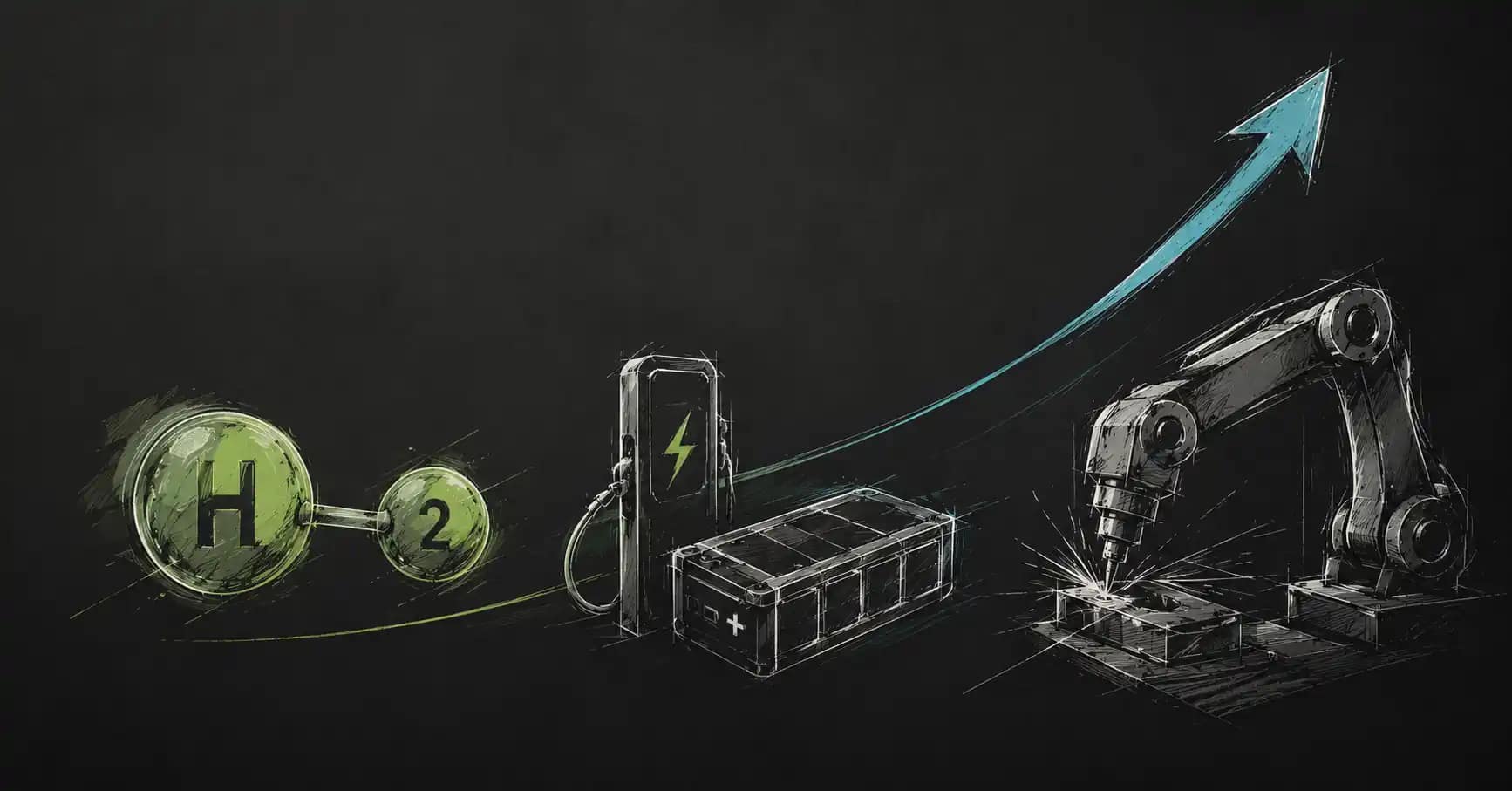
$255.9 million. 28 deals. A 53% jump from the week before. But the headline number is not what matters here. What matters is that three of the five largest cheques this week went to companies building physical infrastructure – hydrogen, batteries, and CNC machines – while Zepto quietly told the market exactly how much its 10-minute promise actually costs.
Total Capital
28 deals confirmed
Week-on-Week Jump
From $165.3M prior week
Hygenco Round
IFC + Siemens + Fullerton
Zepto FY26 Net Loss
Up 26% YoY, per UDRHP
What This Week Actually Signals
Welcome to this week’s India Startup Funding Analysis June 8-14, 2026. Twenty-eight Indian startups raised approximately $255.9 million this week – a 53% jump from the $165.3 million raised across 17 deals the week before. Six rounds were growth-stage, seventeen were early-stage, and five remain undisclosed. On paper, this looks like a strong recovery week. Underneath it, something more specific is happening: the largest cheques are going to companies that make physical things – hydrogen plants, EV chargers, and CNC machines – not apps.
Hygenco’s $105 million green hydrogen round was the week’s single largest deal – and it was not led by a typical Indian VC. It was co-led by IFC, Siemens Financial Services, and Fullerton Carbon Action Fund, three institutions writing their first-ever direct green hydrogen cheques in India. Two days later, Exponent Energy closed Rs 200 crore with 360 ONE Asset making its first EV sector bet and Hitachi Ventures making its first India energy investment ever. Two days after that, Ethereal Machines – a precision CNC manufacturing company – closed a Rs 272 crore Series B, the largest rupee-denominated deal of the week. Three “firsts” for three different global institutions, all in one seven-day window, all pointed at Indian industrial infrastructure.
And then there is Zepto. On June 9, the quick-commerce unicorn filed its updated DRHP – the document every analyst has been waiting for since SEBI’s observation letter in May. The numbers are genuinely two-sided. Revenue more than doubled to Rs 22,623 crore. But net loss also rose 26% to Rs 5,905 crore. The one number that should matter most to anyone reading this India startup funding analysis for June 8-14, 2026: Zepto’s adjusted EBITDA loss per order narrowed from Rs 136 in FY25 to just Rs 59.4 by Q4 FY26. That is the real story – not the headline loss, but the unit economics curve.
Weekly Funding Snapshot – June 8-14, 2026
| Startup | Sector | Amount | Stage | Lead Investor(s) |
|---|---|---|---|---|
| Hygenco | Green Hydrogen | $105M | Growth Equity | IFC, Siemens Financial Services, Fullerton Carbon Action Fund |
| Ethereal Machines | Precision Mfg / Deeptech | Rs 272 Cr (~$28.5M) | Series B | Undisclosed (institutional) |
| Exponent Energy | EV Rapid Charging | Rs 200 Cr (~$21.1M) | Series B2 | 360 ONE Asset, TDK Ventures, Hitachi Ventures |
| 4baseCare | Precision Oncology / AI | Rs 128 Cr (~$13.3M) | Series B (extended) | growX Ventures, Infosys |
| Immuneel Therapeutics | Cancer Cell Therapy | Rs 100 Cr (~$10.5M) | Series B | Singularity AMC, Rainmatter (Zerodha) |
| Rekise Marine | Marine Robotics | $9.7M | Seed | Accel, NKSquared |
| Manam Chocolate | D2C / Craft Food | $9M | Growth Round | Omnivore, Turner Morrison consortium |
| BazaarNow | Quick Commerce (B2B) | Rs 72 Cr (~$7.7M) | Early Stage | Peak XV Partners |
| Celebal Technologies | Enterprise / Debt | Rs 50 Cr (~$5.9M) | Venture Debt | BlackSoil Capital |
| + QubeHealth-Pay (healthtech, undisclosed) · Rivvun AI (enterprise SaaS, undisclosed) · 13 additional early-stage deals totalling $30.1M · 5 undisclosed financings · Non-funding: Zepto files updated DRHP for Rs 8,010 Cr fresh issue · Sanskrit Capital launches with Rs 700-1,000 Cr target · Fidelity sells Meesho stake worth Rs 988 Cr | ||||
🌿 Largest: Hygenco $105M
⚙ Precision Mfg: Rs 272Cr
⚡ EV Charging: Rs 200Cr
🧬 2 Cancer-Tech Raises
Where The Capital Went
Green Hydrogen
$105M
Precision Mfg
$28.5M
EV Charging
$21.1M
Oncology / Cancer Tech
$23.8M
Marine Robotics
$9.7M
D2C + Commerce + Debt
~$22.6M
Key Deal Analysis
1. Hygenco – $105M Equity | Green Hydrogen | Total Funding Now $130M
On June 5, three institutions that have never written a direct green hydrogen cheque in India – IFC, Siemens Financial Services, and Fullerton Carbon Action Fund – signed definitive agreements for a combined $105 million equity investment into Hygenco Green Energies. This is the largest deal that landed inside our June 8-14 reporting window once the announcement effects rippled through, and it deserves close reading because of who is writing the cheque, not just how much.
IFC is investing roughly $25 million from its own account, plus running two blended finance facilities designed to de-risk the platform and pull in private capital alongside it. Siemens is putting in roughly $25 million through its B2B financing arm – not its venture fund, its financing arm, which signals an industrial, supply-chain-level commitment rather than a speculative bet. Fullerton Carbon Action Fund is contributing up to $30 million. Hygenco had previously raised about $25 million from SBI Ventures’ Neev II Fund in 2022. This round takes total funding to $130 million.
What Hygenco actually does: it designs, builds, and operates green hydrogen and green ammonia production facilities for industrial customers who cannot easily electrify – steel, chemicals, fertilizer, heavy manufacturing. It currently runs two commercial plants and is starting construction on three to four more in 2026-27. It is also a beneficiary of the government’s PLI scheme under the Strategic Interventions for Green Hydrogen Transition (SIGHT) programme – meaning this private capital is layering on top of, not replacing, public policy support.
→ Strategic implication: When a B2B industrial financing arm like Siemens Financial Services writes a $25M cheque into an Indian green hydrogen company, it is effectively pre-qualifying that company as a future equipment and engineering customer or partner. For founders in industrial decarbonisation, the playbook is now visible: build a project that a multilateral (IFC), an industrial conglomerate’s financing arm (Siemens), and a climate-focused fund (Fullerton) can all justify backing for different reasons. That triangulation is what unlocked $105M here.
2. Ethereal Machines – Rs 272 Cr (~$28.5M) Series B | Precision Manufacturing / Deeptech
Ethereal Machines topped the rupee-value charts this week with a Rs 272 crore Series B – and it is a company most consumer-facing media will never cover, because it does not sell to consumers. Founded in 2014 by Kaushik Mudda and Navin Jain, the Bengaluru-based company designs and operates proprietary multi-axis CNC machines, and sells precision component manufacturing as a service – Machining-as-a-Service – to clients across aerospace, defence, healthcare, semiconductors, and consumer electronics.
This is an eleven-year-old company. That timeline matters. Ethereal Machines did not raise a Series B nine months after founding like some of the consumer names we have covered in recent weeks – it spent over a decade building proprietary hardware, proving out a manufacturing-as-a-service model, and building a client base across some of the most quality-sensitive sectors in industry (aerospace and defence do not tolerate machining tolerances casually). The Rs 272 crore raise is the market recognising a decade of execution, not a hype cycle.
→ Strategic implication: Ethereal Machines sits exactly at the intersection of two themes Drudhh has tracked all month – India’s “Make in India” precision manufacturing push (see Mekr Technologies, May 12-18) and the semiconductor/defence supply chain build-out. A CNC machine maker that also offers Machining-as-a-Service is infrastructure for every other hardware startup in this newsletter. Watch for Ethereal Machines client announcements – they may double as a leading indicator for which deeptech startups are scaling production.
3. Exponent Energy – Rs 200 Cr (~$21.1M) Series B2 | EV Rapid Charging | Total Raised: $65.7M
Exponent Energy’s Series B2, announced June 10, is a masterclass in reading investor “firsts” as signals. The round was co-led by 360 ONE Asset and TDK Ventures, with Hitachi Ventures joining as a new participant – and both 360 ONE and Hitachi explicitly stated this was their first-ever investment in their respective categories: 360 ONE’s first EV sector bet, Hitachi Ventures’ first energy investment in India, full stop.
What Exponent actually builds: a full-stack energy system – battery packs, charging stations, and connectors – engineered so commercial EVs using standard lithium-ion cells can go from 0% to 100% charge in roughly 15 minutes, backed by a 3,000-cycle battery life warranty. Tobias Jahn of Hitachi Ventures put it bluntly: “Exponent sells fleet uptime and energy charging… that full-stack proprietary solution is what builds the moat, and the recurring revenue flywheel from here is what makes this a genuinely exciting EV charging investment.” TDK Ventures – an existing investor since 2023 – increased its stake through a follow-on, while YourNest, Exponent’s first institutional backer, added another $4 million through its Continuum Fund. Existing investors Eight Roads Ventures, Lightspeed, 3one4 Capital, and AdvantEdge VC all participated too. Total raised since 2020: $65.7 million.
→ Strategic implication: Notice the cap table discipline: every single existing investor participated in this round, plus three new entrants making category “firsts.” When 100% of your existing cap table re-ups and you add new institutional firsts in the same round, that is one of the strongest signals available to outside observers. For EV infrastructure founders, “fleet uptime as a service” – not just hardware – is the framing that is attracting energy conglomerates’ venture arms right now.
4. 4baseCare (Rs 128 Cr) & Immuneel Therapeutics (Rs 100 Cr) | India’s Cancer-Tech Double Header
Two cancer-focused biotech companies closed Series B rounds in the same week – and they represent two completely different bets on the same underlying problem: India needs better, more affordable, more representative cancer care.
4baseCare closed its Series B at Rs 128 crore (~$13.3M) with a Rs 38 crore top-up led by growX Ventures and Infosys, following an earlier Rs 90 crore first close backed by Ashish Kacholia, Lashit Sanghvi, and Yali Capital. Founded by Hitesh Goswami and Kshitij Rishi, 4baseCare’s flagship platform OncoTwin uses genomics, bioinformatics, and AI to help oncologists make treatment decisions from clinico-genomic and real-world patient data. growX founder Ashish Taneja’s framing is the key insight: “One of the biggest gaps in precision oncology today is the underrepresentation of non-Caucasian populations in genomic datasets, which limits the relevance of clinical decision-making.” 4baseCare runs labs in India, Dubai, Nepal, and the Philippines and plans 8-10 more countries in 12-18 months, scaling from 1,500 to 8,000-10,000 genomic tests monthly.
Immuneel Therapeutics raised Rs 100 crore (~$10.5M) in a Series B led by Singularity AMC and Rainmatter (Zerodha’s investment arm) – a completely different bet on cell and gene therapy (CAR-T) for blood cancers. Where 4baseCare is a data and diagnostics play, Immuneel is therapeutics – actually manufacturing engineered immune cells to treat cancer. Rainmatter’s presence here, alongside its appearance in VoltSeal and Agilitas Sports the prior week, continues to build its profile as a fund willing to back genuinely hard science when the mission fits.
→ Strategic implication: India now has institutional capital backing both ends of the cancer-care value chain in the same week – diagnostics/AI (4baseCare) and therapeutics/cell-therapy (Immuneel). Corporates like Infosys writing healthcare-AI cheques alongside specialist funds is a template other IT services majors may follow. If you are building in oncology – diagnostics, therapeutics, or care delivery – both growX/Infosys and Singularity AMC/Rainmatter are now live, demonstrated checkwriters in this exact category.
3 Investor Behaviour Patterns This Week
PATTERN 01 Global industrial conglomerates are making their “first” India bets – and choosing climate/energy infrastructure to do it
Siemens Financial Services’ first direct green hydrogen investment in India. Hitachi Ventures’ first-ever India energy investment. 360 ONE Asset’s first EV sector bet. Fullerton Carbon Action Fund’s first direct green hydrogen investment. Four “category firsts” from four different global or pan-Asian institutions, landing in one seven-day window, all in climate and energy infrastructure. This is not coincidence – it is a signal that the institutional on-ramp into Indian climate infrastructure has been built, tested, and is now being used simultaneously by multiple players who were all evaluating the category in parallel. Founders in clean energy, battery tech, and industrial decarbonisation should expect more “first checks” from conglomerate venture arms in H2 2026.
PATTERN 02 Late-stage capital is dominating the broader fortnight – 80% of one week’s capital went to growth-stage rounds
Per Tracxn/Sahyadri data for the overlapping June 5-11 window, late-stage funding accounted for 80.2% of total capital ($128.6M of $160.3M), versus only 39.9% the week before – a complete reversal in composition even though early-stage deal count remained roughly similar. Hygenco’s $105M alone explains much of this skew, but Ethereal Machines and Exponent Energy’s growth-stage rounds reinforce it. The signal for early-stage founders: capital has not disappeared from seed and Series A, but the headline-grabbing dollars are increasingly concentrated in fewer, larger, later-stage cheques to companies that have already proven a model.
PATTERN 03 IT services majors are becoming healthcare-AI investors, not just vendors
Infosys co-leading 4baseCare’s Series B top-up alongside growX Ventures is part of a broader pattern: large Indian IT services companies, sitting on cash and looking for AI-era relevance, are writing direct equity cheques into AI-native healthcare startups rather than simply selling them implementation services. This mirrors what we have seen with Wipro Enterprises (Anveshan, late May) and Bikaji Foods Family Office (Dil Foods, mid-May) – large Indian corporates using balance-sheet capital as a strategic, not purely financial, instrument. For AI-healthcare founders, an IT-services major’s venture or corporate development team is now a credible Series B co-investor, not just a future client.
The Deal Most People Missed
⚑ Underreported Signal
Sanskrit Capital launches with a Rs 700-1,000 Cr target – led by an investor who has seen India’s growth-stage market from the inside for over a decade
Buried inside the same June 9 roundup that broke Zepto’s DRHP news: Ashish Dave, former CEO of Mirae Asset Venture Investments India, has launched Sanskrit Capital – a new Mumbai-based VC firm targeting a maiden fund of Rs 700-1,000 crore ($83-119 million) for growth-stage investments.
This matters for a simple reason: fund-formation news is a leading indicator, not a lagging one. Every large fund that launches today is the source of term sheets six to eighteen months from now. Mirae Asset Venture Investments India, under Dave’s prior leadership, built a reputation for disciplined growth-stage bets in Indian consumer and fintech. A new fund from the same playbook, sized at Rs 700-1,000 crore, is effectively a forward-looking signal about where Series C-D capital will be available in late 2026 and 2027.
For founders currently at Series B and planning a growth round in 12-18 months: Sanskrit Capital is now on your target list, and its thesis will likely echo Mirae’s prior growth-stage consumer/fintech focus until proven otherwise.
Non-Funding Signals That Matter This Week
Zepto files updated DRHP for Rs 8,010 Cr fresh issue – and the unit economics story is better than the headline loss suggests
Zepto’s June 9 UDRHP filing disclosed a Rs 8,010 crore fresh issue plus an OFS of 1,135 crore equity shares – and the company is separately seeking a Rs 1,602 crore pre-IPO placement on top of that. The headline numbers: FY26 operating revenue more than doubled to Rs 22,623 crore (from Rs 11,109 crore in FY25), while net loss rose 26% to Rs 5,905 crore across 1,139 dark stores. Read in isolation, “losses up 26%” sounds bad. But the per-order economics tell a different story: adjusted EBITDA loss per order narrowed from Rs 136 in FY25 to Rs 78.75 for full-year FY26, and to just Rs 59.4 per order in Q4 FY26 alone. Revenue is compounding faster than losses, and the per-unit trend is improving quarter over quarter. This is the filing every quick-commerce investor in India – public or private – will be benchmarking against for the next year.
Fidelity sells Rs 988 Cr of Meesho shares – a pre-IPO liquidity event, not a confidence vote against the company
Fidelity offloaded Meesho shares worth Rs 988 crore through a block deal this week. Large institutional sell-downs ahead of an IPO are routine portfolio management – funds rebalance, lock in gains on long-held positions, or make room for new commitments (such as, potentially, Sanskrit Capital’s new fund). The more important context: this transaction happened the same week Honasa Consumer’s stock hit a 52-week high on an upbeat FY31 outlook, and AutoFurnish completed its public listing – India’s secondary and public markets for consumer-tech are actively repricing assets in both directions simultaneously. Do not read any single block deal as a directional signal on its own.
June 2026 – Two Weeks In
Two weeks into June, the pattern is becoming clear: India’s startup funding market is alternating between consumer-facing “trust” plays (FirstClub’s $55M, week one) and hard industrial infrastructure (Hygenco, Ethereal Machines, Exponent Energy, week two). Combined, June’s first two weeks have already crossed roughly $443 million ($187M + $255.9M) across 49 confirmed deals – tracking well ahead of May’s equivalent two-week pace once Rapido’s one-off $240M is excluded from the comparison.
The sector story for June so far reads like a checklist of “what India needs to build”: quick commerce trust (FirstClub), EV manufacturing capital structures (Simple Energy), sportswear vertical integration (Agilitas), enterprise AI video (TrueFan), green hydrogen (Hygenco), EV charging infrastructure (Exponent), precision manufacturing (Ethereal Machines), and cancer-tech (4baseCare, Immuneel). Almost none of this is “an app.” The capital is flowing toward companies that make, charge, treat, or manufacture something physical – a continuation of the rotation Drudhh first flagged in late May.
Year-to-date, India’s startup ecosystem has now raised well over $8 billion across equity and structured rounds. If the current run-rate of $400M+ per fortnight holds through Q3, 2026 is on pace to be the strongest year for Indian startup funding since 2022 – driven not by a single mega-trend, but by simultaneous momentum across climate, deeptech, healthcare, and consumer trust categories.
What This Week Means For Founders
→
→
→
→
→
What To Watch – June 15-21, 2026
►
Zepto pre-IPO placement (Rs 1,602 Cr): Now that the UDRHP is public, watch for which institutions take up the pre-IPO placement – the investor list will signal who believes the per-order economics narrative over the headline-loss narrative.
►
Sanskrit Capital’s first close: Ashish Dave’s new fund just launched targeting Rs 700-1,000 Cr. Watch for anchor LP announcements – they will reveal whether this fund leans toward consumer/fintech (Mirae’s prior focus) or branches into deeptech/climate, where capital is currently flowing fastest.
►
Hygenco project announcements: With $105M fresh and a mandate to scale to 5-6 plants, watch for site selection or MoU announcements – particularly any follow-up to the Telangana green hydrogen MoU signed in December 2025.
►
Skyroot Vikram-1 launch window: Still the most-watched pending event in Indian deeptech. Any update from Sriharikota will dominate the news cycle and re-anchor every spacetech valuation conversation.
►
Acko DRHP: With Zepto’s UDRHP now public and bankers appointed at Acko, the insurtech unicorn’s own DRHP filing could land any week – watch for SEBI filing announcements.
Frequently Asked Questions
How much funding did Indian startups raise in the week of June 8-14, 2026?
Indian startups raised approximately $255.9 million across 28 deals during June 8-14, 2026 – a 53% increase from the prior week’s $165.3 million across 17 deals. Six deals were growth-stage, 17 were early-stage, and 5 remained undisclosed. The week was led by Hygenco’s $105 million green hydrogen round, Ethereal Machines’ Rs 272 crore Series B, and Exponent Energy’s Rs 200 crore Series B2.
Which Indian startup raised the most funding in June 8-14, 2026?
Hygenco Green Energies raised the largest round – $105 million co-led by IFC, Siemens Financial Services, and Fullerton Carbon Action Fund for green hydrogen production. The investment marked the first direct green hydrogen investment in India for all three institutions, bringing Hygenco’s total funding to $130 million.
What is Hygenco and why did global investors put $105 million into it?
Hygenco Green Energies is India’s leading green hydrogen platform, operating two commercial plants with three to four more planned for 2026-27. IFC, Siemens, and Fullerton co-led a $105M round – their first direct green hydrogen bets in India – to scale production of green hydrogen and green ammonia for hard-to-abate industries like steel and chemicals, aligned with India’s National Green Hydrogen Mission and PLI/SIGHT scheme.
What did Exponent Energy raise and why does it matter for India’s EV sector?
Exponent Energy raised Rs 200 crore (~$21.1M) in a Series B2 co-led by 360 ONE Asset and TDK Ventures, with Hitachi Ventures joining as a new investor. This marked 360 ONE Asset’s first EV sector bet and Hitachi Ventures’ first energy investment in India. Exponent’s technology enables full EV charging in 15 minutes using standard lithium-ion cells, taking its total funding to $65.7 million since 2020.
What did Ethereal Machines raise in its Series B round?
Ethereal Machines, a Bengaluru-based precision manufacturing startup founded in 2014, raised Rs 272 crore (~$28.5M) in its Series B – the largest rupee-denominated deal of the week. The company designs proprietary multi-axis CNC machines and offers Machining-as-a-Service to aerospace, defence, healthcare, semiconductor, and consumer electronics clients.
What did 4baseCare and Immuneel Therapeutics raise, and what does it signal?
4baseCare closed its Series B at Rs 128 crore (~$13.3M) with a Rs 38 crore top-up led by growX Ventures and Infosys, for AI-driven precision oncology genomics. Immuneel Therapeutics raised Rs 100 crore (~$10.5M) in a Series B led by Singularity AMC and Rainmatter for CAR-T cancer cell therapy. Two cancer-tech raises in one week signal that Indian capital now treats oncology – both diagnostics and therapeutics – as institutional-grade.
What did Zepto’s updated DRHP reveal about its IPO and finances?
Zepto’s UDRHP, filed June 9, disclosed a Rs 8,010 crore fresh issue plus an OFS of 1,135 crore shares, and a separate Rs 1,602 crore pre-IPO placement. FY26 revenue more than doubled to Rs 22,623 crore (from Rs 11,109 crore), while net loss rose 26% to Rs 5,905 crore. However, adjusted EBITDA loss per order narrowed from Rs 136 to Rs 59.4 by Q4 FY26 across 1,139 dark stores – a positive unit-economics trend.
Which sectors attracted the most startup investment in India during June 8-14, 2026?
Climate and energy infrastructure led by value: green hydrogen (Hygenco $105M) and EV rapid-charging (Exponent Energy $21.1M). Precision manufacturing followed with Ethereal Machines’ $28.5M Series B. Healthcare/biotech saw two cancer-focused raises – 4baseCare ($13.3M) and Immuneel Therapeutics ($10.5M). Marine robotics (Rekise Marine, $9.7M seed), D2C food (Manam Chocolate, $9M), and quick commerce (BazaarNow, ~$7.7M) rounded out the week.
About Lavish Pundir
Lavish Pundir is the Founder & Editor of Drudhh, an independent publication covering startups, venture capital, funding, business models, and growth.
His work focuses on understanding how companies raise capital, acquire customers, build competitive advantages, and scale over time. Through Drudhh’s Capital Intelligence reports, he analyzes startup funding trends, investor behaviour, and emerging opportunities across India’s startup ecosystem.
Drudhh Editorial
Capital Intelligence · India Startup Ecosystem
Drudhh Editorial tracks India startup funding, VC activity, and ecosystem trends every week. Our team analyses capital patterns, investor behaviour, and sector signals to give founders and investors the interpretation layer that news roundups miss.
More from Drudhh Capital Intelligence
→ Last Week: FirstClub Doubled Its Valuation, And a 260% Funding Rebound Hit India
→ May 26-31: C2i Semiconductors, StrainX Bioworks, and India’s Most Honest Week of May
Sources: Entrackr · Business Standard · StartupTalky · Sahyadri Startups / Tracxn · IFC Pressroom · Renewable Watch · pv magazine India · Outlook Business · Opportunity India · Medical Buyer · Analytics Insight · Company announcements
Capital intelligence report – not investment advice. All figures from verified public sources. Undisclosed amounts marked accordingly.
© 2026 Drudhh.com · India Capital Intelligence · Weekly Tracker